Inclusion, Ramps, and the Kingdom: Lessons From Special Education
Mar 11, 2026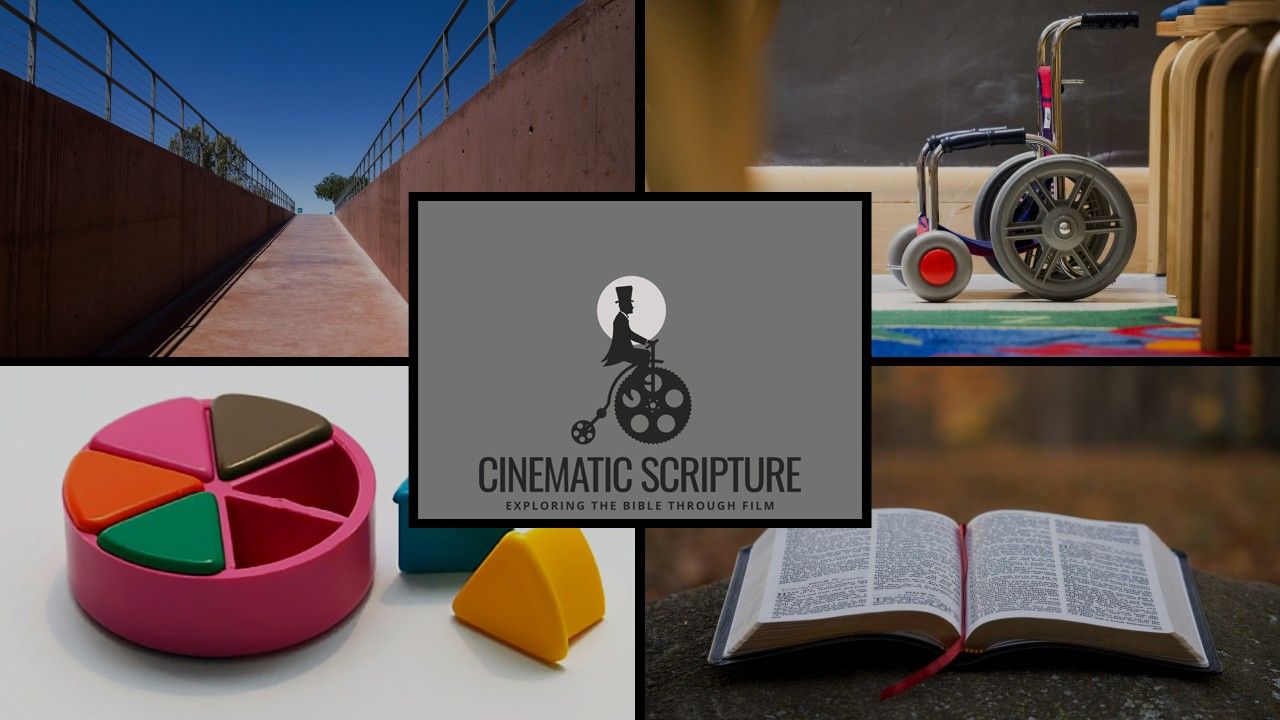
I spent a decade in ministry — youth pastor, lead pastor, the whole thing. I went to college, sat through trainings, found mentors, checked all the boxes they say you need to check if you want to be a “successful pastor.”
But stepping away from it in 2023 made me realize something I couldn’t see while I was in the weeds: the version of success I was taught, didn't line up with where God was leading me.
In 2024, I took a job as a paraprofessional in a center‑based program working with cognitively impaired high‑school students. I loved it immediately. The staff were supportive, the students were incredible, and honestly? It was far less stressful than pastoring a church.
Then, heading into the 2025–2026 school year, a position opened in the Adult MOCI room — working with students ages 18–26, teaching life skills, social skills, and work habits. My coworkers encouraged me to apply. I did. I got the job. And now I’m back in school, working toward a third degree, and teaching full‑time.
If you had asked me in the fall of 2023 whether I’d ever become a teacher, I would’ve laughed.
But this has become one of the greatest experiences of my life.
Part of Cinematic Scripture is learning to see the story in life — not just in film or Scripture, but in the everyday moments that shape us. And God has used this center‑based classroom to help me see the story more clearly than ever.
Recently, we had a full‑day training led by an incredibly funny and kind professor from Canada. The training was about education… but I couldn’t stop seeing the implications for faith, discipleship, and the church.
So today, I want to share three insights this training on special education gave me about following Jesus.
Insight #1: Inclusion is not lowering the bar, and it is not assimilation
Inclusivity is a loaded word in Christian circles.
Say it out loud and people immediately jump to debates about sin, lifestyle, doctrine, compromise. But before you label me a heretic, stay with me, because what I’m talking about has nothing to do with lowering the bar of holiness.
It has everything to do with how Jesus forms people.
In special education, the goal is inclusion. But here’s what I’ve learned: Most people think inclusion means “help the disabled student blend in with everyone else.”
Make them act like the general‑ed students. Make them fit the mold. Make them look “normal.”
But that’s not inclusion. That’s assimilation.
“You can come in… as long as you look, act, and talk like us.”
And the more I sat with that, the more I realized: this is exactly how many churches operate.
We preach grace, love, patience, kindness, discipleship, but we often demand uniformity.
We don’t give people time to grow. We don’t trust the Spirit to sanctify at His pace. We want people to match our culture, our preferences, our personality, our version of “maturity.”
That’s not inclusion. That’s assimilation dressed up in religious language.
During our training, the instructor used an illustration that hit me like a parable: Trivial Pursuit.
You know the game — the little pie piece with different colored wedges. In the Star Wars edition (my favorite), the character sits on top — Yoda, Obi‑Wan, Vader — and the colored wedges fit underneath.
And suddenly, I saw it: This is what inclusion in the Kingdom is supposed to look like.
We are all multi‑colored people with different stories, different cultures, different wounds, different strengths, different shades of humanity.
And in Christ, every “color” of our lives is meant to come under Him. Not erased. Not replaced. Not forced into sameness.
Surrendered. Integrated. Held together in Him.
Jesus isn’t one wedge among many. He’s the One the whole piece sits under.
So true inclusion in the church isn’t: “Everyone become the same.”
It’s: “Everyone bring your whole self — every color, every story — and place it under Christ.”
And when we do that? Something beautiful happens:
Every Christian becomes an advocate for every other Christian. Because we stop seeing each other as threats or projects… and start seeing each other as people being shaped by the same Christ.
That’s inclusion. Not assimilation. Not uniformity.
Unity through diversity — under Jesus.
Insight #2: Everyone Benefits From a Ramp
One of the first things you learn in special education is that access matters.
Think of a person in a wheelchair trying to enter a coffee shop. If there’s no ramp — only stairs — it doesn’t matter how good the coffee is. They simply can’t get in.
Sure, you can retrofit a ramp later, and that helps. But the building still wasn’t designed with them in mind. It’s access… but barely.
The better option is obvious: design the space from the beginning with accessibility in mind.
And here’s the thing most people don’t realize: Ramps don’t just help the person who “needs” them. Ramps help everyone.
Parents with strollers. Delivery workers with carts. People with injuries. People who are tired. People who just appreciate an easier path. A ramp is a gift to the whole community.
And the more I thought about that, the more I realized: The church doesn’t offer many ramps.
We offer programs — Sunday morning, Wednesday night, small groups, men’s breakfasts, women’s brunches. These are fine. They help some people.
But what about the people who tried those ramps and got hurt? What about the people who fell off? What about the people for whom those ramps didn’t lead anywhere they could actually access?
The hard truth is this: Most church ramps are shallow.
Yes, the Word is preached. But for many, the relationships don’t extend past Sunday. The body isn’t functioning together, only the few who fit the culture, who assimilate into the preferred mold.
Jesus didn’t say, “They will know you are my disciples by how well you run your programs.” He said, “They will know you are my disciples by your love for one another.”
And here’s the part that hit me hardest: The church itself has become a ramp — and many people have fallen off.
Church hurt. Spiritual abuse. Burnout. Disillusionment.
People who tried to climb the only ramp we offered… and were told, “This is the only way in. If you want Jesus, you have to use this ramp — no matter how much it hurt you.”
There is nothing Christlike about that.
If Jesus is the destination, then every ramp must lead to Him — not to assimilation, not to performance, not to church culture.
We need more ramps. Different ramps. Ramps designed with real people in mind. Ramps that meet people where they are, not where we wish they were.
Because in the Kingdom, access isn’t a luxury. It’s love.
Insight #3: Multiple Systems of Support Are Kingdom Principles
In education, there’s a framework called UDL — Universal Design for Learning.
At its core, UDL is simple: Don’t give everyone the same support. Give everyone the support they need.
Multiple pathways. Multiple tools. Multiple ways to access the same truth.
And the more I’ve learned about UDL, the more I’ve realized: this isn’t just good teaching, it’s the logic of the Kingdom.
Two stories from the Gospels came alive for me in a new way.
John 5 — The Man With No Support
A man has been paralyzed for thirty‑eight years. Every time the water is stirred, the first one in is healed.
But this man has no one. No friends. No helpers. No support system.
He can’t get to the water. He can’t access the “ramp.”
And Jesus doesn’t say, “Try harder.” “Have more faith.” “Figure it out.”
Jesus becomes the access. He becomes the ramp.
The man didn’t need a better system. He needed a Savior who would meet him where he was.
Mark 2 — The Man With Four Supports
Another paralyzed man. But this time, he has four friends.
They carry him. They climb a roof. They tear it open. They lower him to Jesus.
When the front‑door ramp is blocked, they build a new one.
And Jesus sees their faith — the faith of the support system — and heals the man.
One man had no support. One man had four.
Both needed Jesus. But their access to Him looked completely different.
This is the Kingdom.
Some people need one ramp. Some need four. Some need a whole community holding them up. Some need time, patience, space, and safety. Some need structure. Some need flexibility. Some need silence. Some need someone to sit beside them in the dark.
Discipleship is not one‑size‑fits‑all. It never has been.
If you garden, you know this. Some plants thrive in full sun. Some burn. Some need shade. Some need trellises. Some need pruning. Some need rich soil. Some need sand.
Different supports. Same goal: growth.
The church should be the same.
We need multiple tiers of support, not because people are weak, but because people are different.
And difference is not a threat. It’s the design of God.
The Kingdom Vision & Conclusion
So here it is — the three things teaching special education is showing me about following Jesus:
- Inclusion is not lowering the bar, and it is not assimilation.
- Everyone benefits from a ramp.
- Multiple systems of support are Kingdom principles.
And when you put them together, a picture of the Kingdom begins to emerge.
Jesus is the most inclusive person who has ever lived. Anyone can come to Him. Any story. Any background. Any wound. Any past.
And at the same time, He is the most exclusive. He alone is the way to the Father.
He doesn’t lower the bar. He is the bar. And He meets people where they are, not where we think they “should” be.
The old covenant couldn’t give people access. The law couldn’t heal. The temple couldn’t reach everyone.
So Jesus became the ramp.
He gave access where there was none. He opened a way where there was no way. He formed a people where every race, age, gender, and social status mattered, not because they were the same, but because they were surrendered to the same Christ.
A multi‑colored people, held together under one Lord, supported by one Spirit, built up through many different kinds of grace.
That’s the Kingdom.
Look, I’m only a year into this teaching thing. But God is using it to help me see the story of what His church looks like. A place where people don’t have to assimilate, don’t have to climb the same ramp, don’t have to pretend they’re further along than they are, but can grow through the support they actually need.
He wants to do the same for you.
Grace and peace, friends.
May you see the ramps God is building in your life and may you become one for someone else.
If this resonates… if you’ve felt this ache… if you want to see Scripture, film, and your life through one unified lens… come to the Off‑Script Masterclass.
This is where I help spiritually displaced Christians who feel fragmented, confused, or “off‑script,” finally see Jesus and understand the story they’re living in.
Most of us are stuck because we’ve been trying sermons, devotionals, and programs —
but it’s keeping us spiritually thin and narratively confused.
And we don’t know how to see Scripture, film, and our own life as one unified story.
That’s why I created The Off‑Script Masterclass — a simple, cinematic way to understand why your faith feels fragmented and how to re‑enter the Story Jesus is actually telling.
When you join the masterclass, you’ll:
- understand why your faith feels off‑script
- see Scripture, film, and your life through one unified lens
- see Jesus clearly again
- know the next step toward clarity, coherence, and Christ
If you’re ready to stop living off‑script and step into the Story Jesus is telling, join the masterclass.
We’re gathering July 11 at 12pm EST.
You can save your seat at cinematicscripture.com — or just click the link in the show notes.